
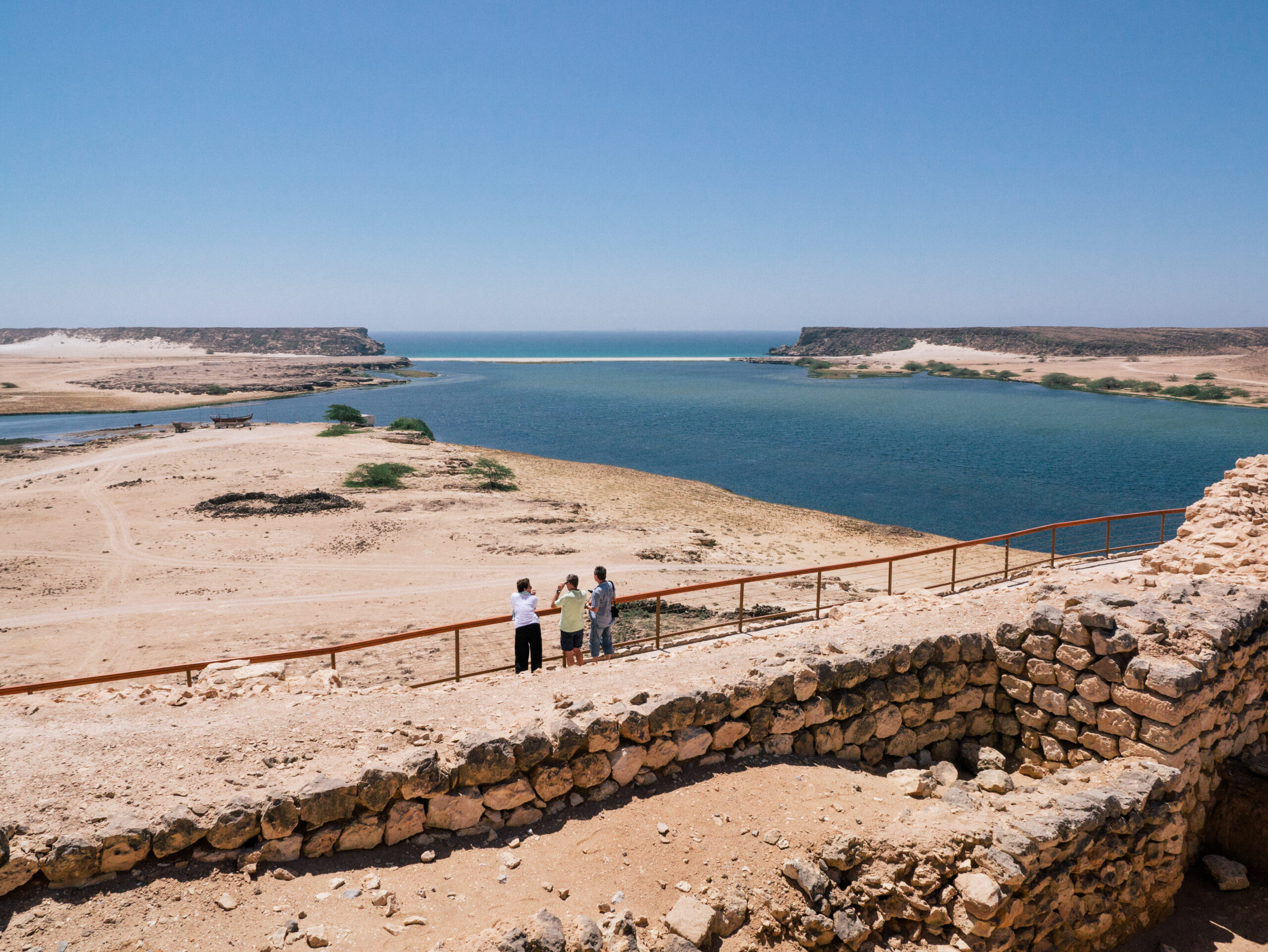
Samharam (also known as Khor Rori) is one of the most important historical sites near Salalah and a key stop for European travelers interested in ancient history, archaeology, and cultural heritage. Located east of the city, the site overlooks a natural lagoon that once served as a vital harbor during the frankincense trade era.
For Europeans visiting Salalah during winter, Samharam offers a calm, open-air cultural experience that contrasts perfectly with nature-based excursions. Rather than crowded museums or reconstructed attractions, travelers explore original ruins in their natural setting, allowing history to feel tangible and real.
This guide explains why Samharam matters, what travelers will see on-site, and why it fits naturally into a winter itinerary focused on depth rather than speed.
Samharam is one of the most important historical sites near Salalah and a key cultural stop for European travelers exploring the region as part of their journey to Discover Salalah.
Why European Travelers Are Drawn to Samharam
Many European travelers—especially Italians—are deeply interested in destinations that reflect shared ancient history. Samharam holds particular appeal because it was directly connected to Mediterranean trade routes during Roman times.
European visitors value Samharam because it offers:
- Authentic archaeological ruins rather than replicas
- Clear historical context tied to global trade
- Quiet surroundings suitable for slow exploration
- Strong visual connection between history and landscape
For travelers who enjoy history without crowds or commercial distractions, Samharam feels rewarding and sincere.
What Makes Samharam Historically Important
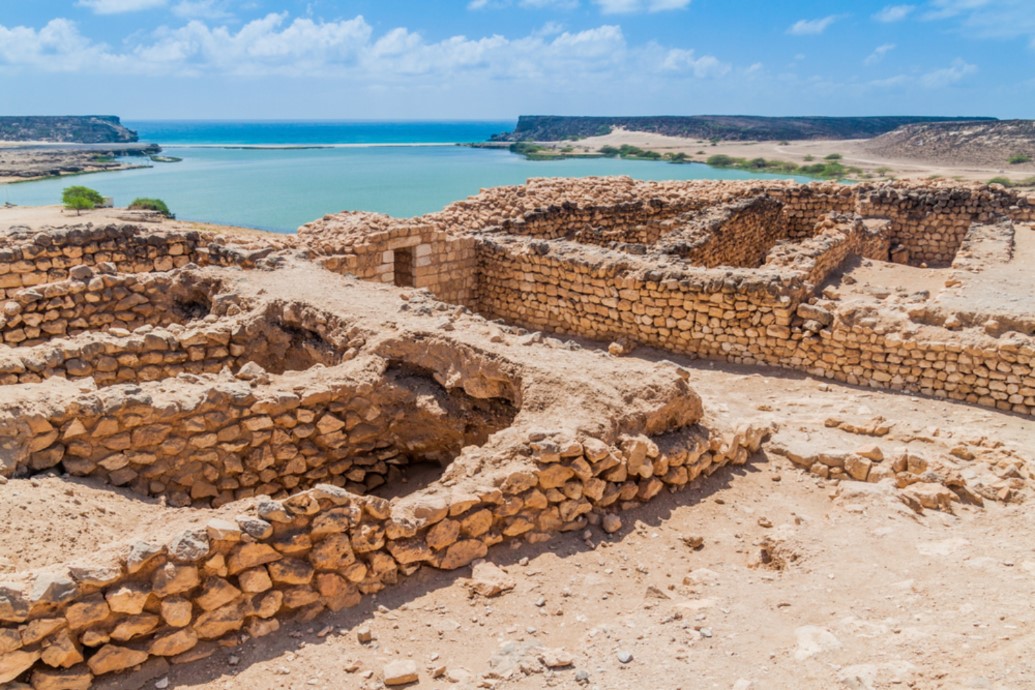
Samharam was once a fortified port city that played a crucial role in exporting frankincense—one of the most valuable commodities of the ancient world. Frankincense harvested in Dhofar was transported through this harbor and shipped to markets across the Roman Empire and the Mediterranean.
The site’s location allowed ships to dock safely while protecting valuable goods. Today, visitors can still identify:
- Defensive walls and towers
- Urban layout of the settlement
- Strategic viewpoints overlooking the lagoon
For European travelers, this creates a powerful connection between Salalah and ancient Europe through trade and shared economic history.
What Visitors See at Samharam (Khor Rori)
Walking through Samharam is a structured yet relaxed experience. The ruins are clearly visible and easy to navigate, even for travelers without a deep background in archaeology.
Visitors typically explore:
- City walls outlining the ancient settlement
- Remains of administrative and storage buildings
- Elevated points overlooking the former harbor
- Informational signs explaining the site’s role
The visit feels educational without being overwhelming, making it suitable for couples, mature travelers, and culturally curious visitors.
The Natural Setting: History Surrounded by Landscape
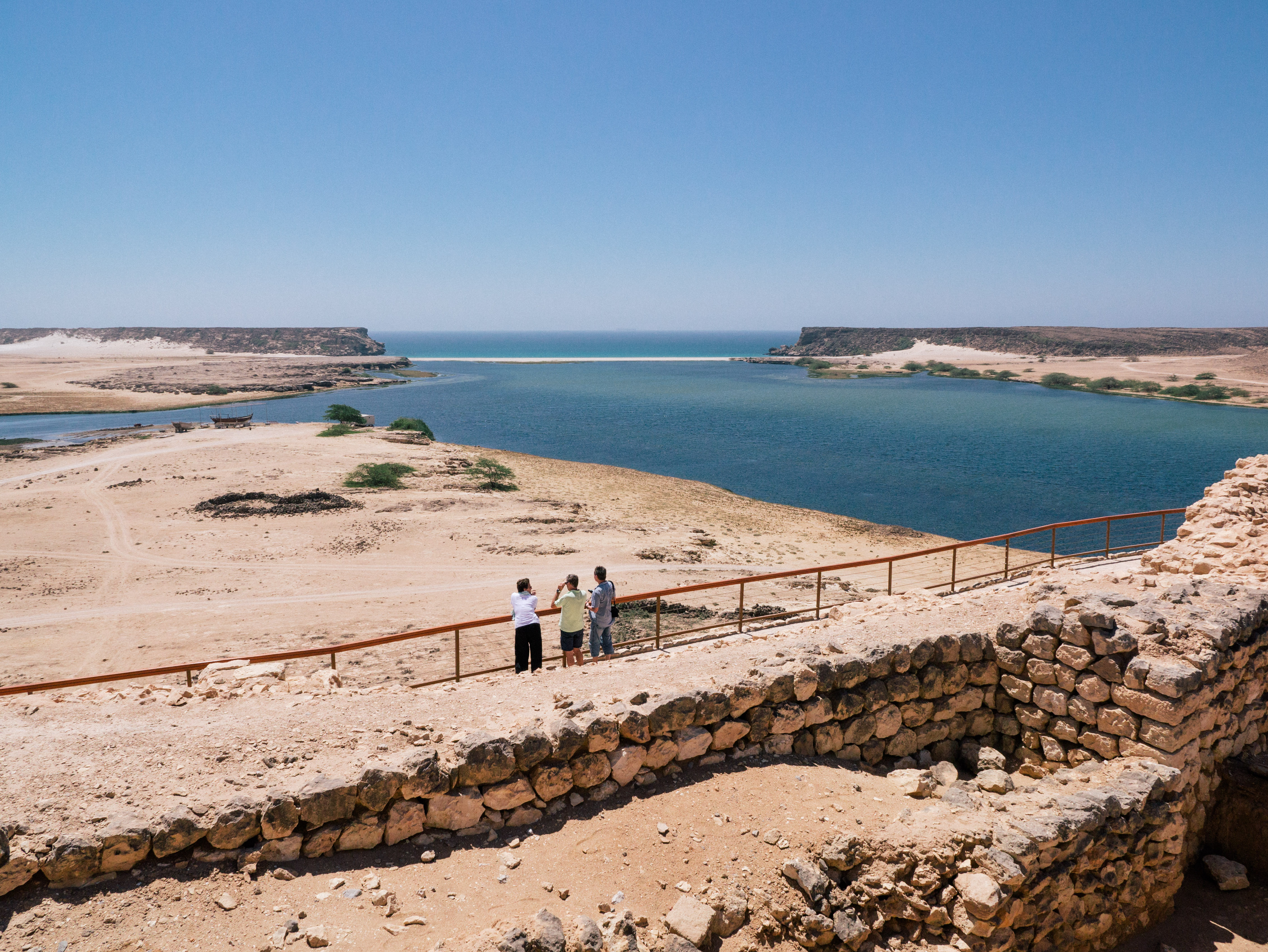
One of the most striking aspects of Samharam is its setting. The ruins sit above a lagoon surrounded by cliffs and open terrain, creating a unique atmosphere where history and nature coexist.
European travelers often appreciate:
- Open views without visual obstructions
- A calm environment ideal for reflection
- Opportunities for photography without crowds
This natural context enhances the visit and distinguishes Samharam from enclosed or urban historical sites.
Many travelers combine a cultural visit to Samharam with nature-focused stops such as Wadi Darbat, creating a balanced itinerary between history and landscape.
Visiting Samharam in Winter (October to March)
Winter is the ideal time for European travelers to visit Samharam. From October to March, Salalah enjoys mild temperatures that make walking and exploring outdoor sites comfortable.
During winter visits:
- Heat is not an issue
- Visibility across the site is excellent
- The lagoon and surrounding landscape are clear
This makes Samharam an easy cultural stop that fits well between nature excursions or coastal visits.
How Long Does a Visit to Samharam Take?
Most European travelers spend between 45 minutes and 1.5 hours at Samharam, depending on interest level and pace. The site works well as:
- A half-day cultural stop
- Part of a combined east-Salalah itinerary
- A relaxed visit without physical strain
Its manageable size makes it appealing to travelers who prefer meaningful stops rather than long, exhausting tours.
Samharam vs Other Historical Sites Near Salalah
Compared to forts or museums, Samharam offers a more immersive experience because of its open-air layout and original ruins.
Travelers who prefer:
- Archaeology over architecture
- Open landscapes over enclosed spaces
- Ancient trade history over local governance
Often find Samharam more engaging than other heritage stops.
Travelers interested in coastal heritage often pair Samharam with nearby sites such as Taqah Castle for a deeper understanding of Dhofar’s history.
Why Samharam Adds Depth to a Salalah Trip
For European winter travelers, Salalah is often about balance—nature, comfort, and culture. Samharam provides historical depth that complements valleys, coastlines, and desert landscapes.
It appeals most to travelers who:
- Enjoy understanding the story behind a destination
- Value authenticity over entertainment
- Prefer calm, informative experiences
Including Samharam helps travelers leave Salalah with a fuller understanding of Dhofar’s role in ancient global history. Many European travelers describe this site as one of the most rewarding cultural stops near Salalah, based on shared visitor reviews.
Final Thoughts: Is Samharam Worth Visiting?
For European travelers visiting Salalah in winter, Samharam (Khor Rori) is absolutely worth including. It offers a rare opportunity to explore an authentic archaeological site connected directly to Mediterranean history—without crowds or commercial pressure.
As part of a well-paced itinerary, Samharam adds cultural richness and historical perspective that elevates the overall travel experience.
FAQ :
Q1: Where is Samharam located?
A: Samharam is located east of Salalah, overlooking the Khor Rori lagoon.
Q2: Is Samharam suitable for European travelers?
A: Yes. It is calm, accessible, and ideal for travelers interested in history and culture.
Q3: How long does a visit to Samharam take?
A: Most visitors spend 45–90 minutes exploring the site.
Q4: Is winter the best time to visit Samharam?
A: Yes. October to March offers mild temperatures and ideal conditions.
Q5: Do visitors need a guide at Samharam?
A: A guide is optional. Informational signs allow for self-guided visits.